
UK Casino Payment Methods 2026: Speed, Fees & Bonus Eligibility Compared
 Available in US
Choosing how to fund a casino account matters more than most players assume. Pick the wrong method and a welcome bonus evaporates before you’ve read the terms. Pick the right one and winnings land in your account within hours, not days.
UK-licensed casinos accept everything from debit cards to mobile wallets, open banking to prepaid vouchers. Speed, fees, withdrawal routes, and bonus eligibility vary dramatically. This guide compares every major payment method available at UKGC-licensed casinos in 2026, backed by real-world withdrawal testing and documented limits.
How to Choose Your Casino Payment Method
The “best” payment method does not exist. What works depends entirely on what you prioritise: speed, privacy, bonus eligibility, transaction limits, or mobile convenience.
Match Your Method to Your Playing Style
Claiming a welcome bonus? Stick to debit cards, Apple Pay, Google Pay, or bank transfers. These qualify universally. Skrill and Neteller are excluded from most welcome offers, and PayPal is occasionally blacklisted in bonus terms. Check before you deposit.
Chasing fast withdrawals? E-wallets deliver the quickest payouts in real-world testing. PayPal, Skrill, Neteller and MuchBetter consistently credited balances within 2 to 24 hours of casino approval, often within minutes. Debit cards have caught up at banks supporting Visa Fast Funds and Mastercard Send, but speed depends on your bank, not the casino.
Playing on mobile? Apple Pay and Google Pay wrap your debit card in biometric authentication—Face ID, Touch ID, fingerprint. No card number typed on a casino site, instant deposits, and bonus eligibility intact. Pay by Mobile (Boku) charges deposits to your phone bill with a built-in £30 daily cap, useful as a spending control but deposit-only.
Want privacy on your bank statement? E-wallets keep the casino name off it; your bank sees PayPal or Skrill, not the gambling site. Prepaid vouchers like PaysafeCard go further—you can buy them with cash at a shop and deposit without sharing bank details at all, though KYC verification before withdrawal remains mandatory under UKGC rules.
High-limit play? Bank transfers and open banking services like Trustly carry the highest transaction ceilings, often £10,000 to £50,000 per transaction compared to the £5,000 typical card limit. Withdrawals return via the same route, often within hours via UK Faster Payments.
What Matters Most: Speed, Limits, Fees or Bonuses
| Method | Deposit Speed | Withdrawal Speed | Min Deposit | Max Deposit | Fees | Bonus Eligible? | Best For |
|---|---|---|---|---|---|---|---|
| Visa/Mastercard debit | Instant | Hours–3 days (bank dependent) | £5–£10 | £5,000–£10,000 | None | Always | Universal default, bonus hunters |
| PayPal | Instant | 2–24 hours | £10 | £10,000 | None (UK bank transfers free) | Usually | Fast withdrawals, privacy |
| Skrill | Instant | 2–24 hours | £10 | £10,000 | ~2% Skrill-to-bank | Often excluded | Fastest payouts (if bonus not needed) |
| Neteller | Instant | 2–24 hours | £10 | £10,000 | Tiered fees | Often excluded | Fastest payouts (if bonus not needed) |
| MuchBetter | Instant | Sub-24 hours | £10 | £10,000 | None to casino | Less often excluded | Mobile-first users |
| Payz | Instant | Sub-24 hours | £10 | £10,000 | None to casino | Sometimes excluded | E-wallet with long history |
| Jeton | Instant | Varies | £10 | Varies | None to casino | Verify T&Cs | Niche acceptance |
| AstroPay | Instant | Varies | Varies | Varies | None to casino | Verify T&Cs | Very limited UKGC acceptance |
| Apple Pay | Instant | Via linked card | £10 | £5,000 | None | Always | iOS mobile users |
| Google Pay | Instant | Via linked card | £10 | £5,000 | None | Always | Android mobile users |
| Pay by Mobile (Boku) | Instant | Deposit-only | £5–£10 | £30–£40/day | Occasional network fee | Usually | Built-in spending cap |
| Trustly | Instant | Hours–24 hours | £10 | £10,000–£50,000 | None | Always | High limits, no card details |
| Zimpler | Instant | Hours–24 hours | £10 | £10,000 | None | Always | Mobile banking users |
| Klarna | Instant | Deposit-only | £10 | £10,000 | None | Often excluded | Limited UK acceptance |
| PaysafeCard | Instant | Deposit-only | £5 | £40/voucher | None | Usually | Cash purchase, no bank details |
| Neosurf | Instant | Deposit-only | £5 | £100–£250/voucher | None | Usually | Cash purchase, limited acceptance |
Withdrawal times recorded after casino approval and KYC verification. Individual casinos and banks vary—check the cashier page for exact limits.
How do I choose the best payment method based on my priorities (speed, privacy, fees, mobile use, bonus eligibility)?
Start with bonus eligibility if you’re claiming an offer: debit cards, Apple Pay, Google Pay and bank transfers qualify everywhere. For speed, e-wallets win on withdrawals but debit cards now match them at banks with fast-payment rails. Privacy requires an e-wallet or prepaid voucher, though KYC verification before cashout is unavoidable. Mobile users get the smoothest experience with Apple Pay or Google Pay. High rollers need bank transfers or Trustly for limits above £10,000 per transaction. Match the method to your priority, not a generic “best.”

Debit Cards — The Universal Default
Visa and Mastercard debit cards are accepted at every UKGC-licensed casino. Deposits process instantly, welcome bonuses always qualify, and withdrawals that once crawled along in three to five working days now land within hours at most UK banks.
Visa and Mastercard Debit Cards
Debit cards are the default for a reason: universal acceptance, zero bonus exclusions, and no separate account to set up. You already own one. Visa and Mastercard dominate UK casino cashiers, with typical deposit limits from £5 to £10 minimum and £5,000 to £10,000 maximum per transaction. Casinos process deposits instantly through PCI-DSS compliant rails with 3D Secure 2.0 two-factor authentication—Visa Secure and Mastercard Identity Check add a fingerprint or SMS code at the payment gateway.
Withdrawals used to be the weak point. Three to five working days was standard until Visa Fast Funds and Mastercard Send arrived, enabling near-instant crediting at supporting banks. Most major UK banks and challenger banks now credit fast-funds payments within hours, sometimes minutes. Barclays, HSBC, Lloyds, NatWest, Monzo, Starling and Revolut all support the rails. A few legacy banks still batch card payments overnight or over one to three working days, so speed depends on your bank, not the casino.
No fees apply. Casinos do not charge for card deposits or withdrawals, and card schemes do not levy fees on UK domestic transactions. Security runs through the same infrastructure that processes every online card payment you make: 24/7 fraud monitoring, zero-liability protection, and instant card freezes via your banking app.
Why Card Withdrawals Are Faster in 2026
The shift happened quietly. Visa Fast Funds launched in 2017, Mastercard Send shortly after, but widespread UK bank adoption took until 2024. These are push-payment rails that credit your account as soon as the casino’s payment processor sends the instruction, bypassing the old BACs batch cycles that settled card refunds over working days.
Your bank determines the speed, not the casino. If your bank supports fast funds, a casino withdrawal approved at midday can land in your account by early afternoon. If your bank has not implemented the rails, the same withdrawal takes one to three working days. No way to tell from the casino’s cashier page—test it once, and you’ll know.
Can I use a credit card at UK online casinos?
No. The UK Gambling Commission banned credit card gambling on 14 April 2020 under Licence Condition 6.1.2 of the LCCP. The ban covers all UKGC-licensed operators and applies to online casinos, sports betting, bingo and lottery accounts. It extends to credit cards loaded into e-wallets: e-wallet accounts used for gambling must be funded by debit card or bank transfer only. The restriction aims to prevent players gambling with money they do not have. Only debit cards and other non-credit methods are accepted.
E-Wallets — Speed and Privacy
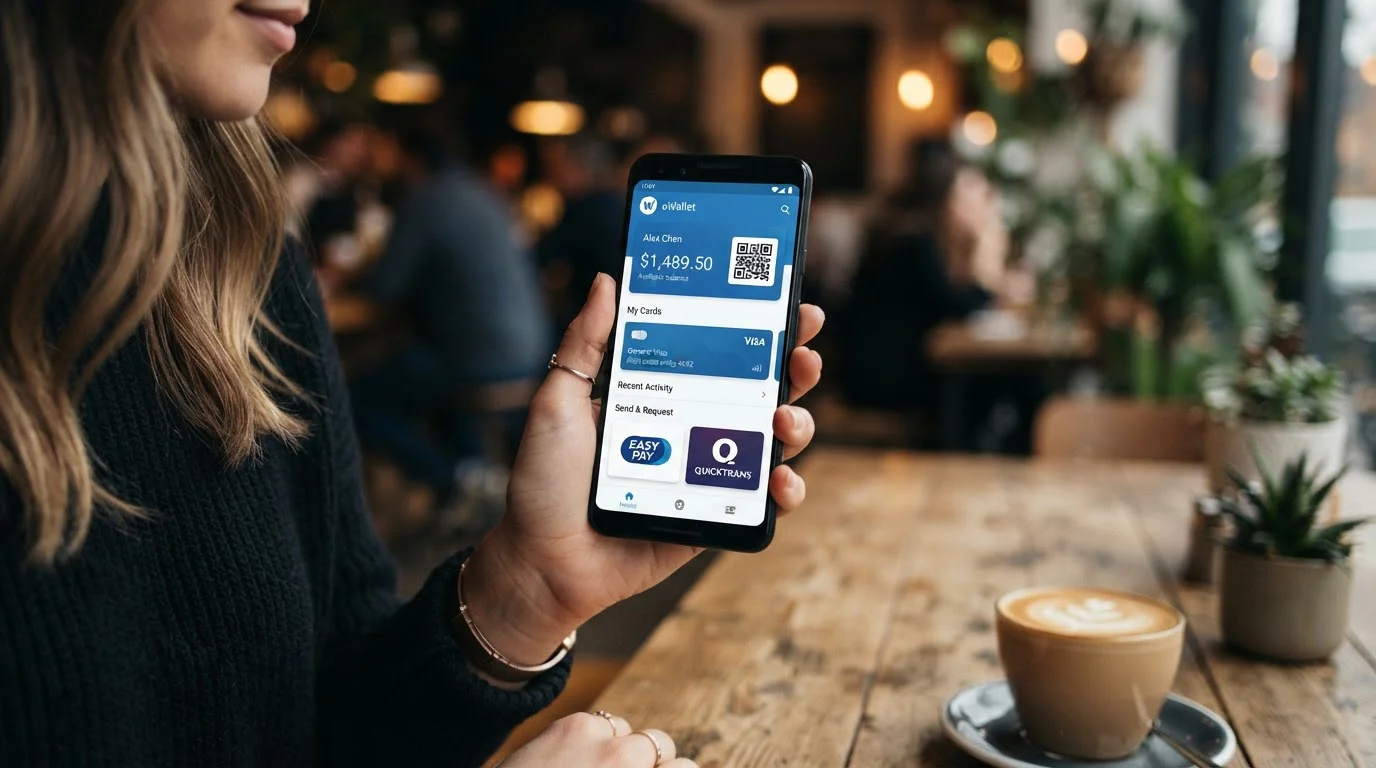
E-wallets sit between your bank and the casino. The casino never sees your card number, your bank statement shows the wallet name rather than the gambling site, and withdrawals arrive faster than any other method in real-world testing. The trade-off: many welcome offers exclude Skrill and Neteller deposits, and occasionally PayPal.
PayPal
PayPal is the most widely accepted e-wallet at UK casinos. FCA-authorized as a payment institution (reference 919135), it operates at the majority of UKGC-licensed operators with instant deposits and withdrawals that typically complete within 2 to 24 hours of casino approval, often much faster. Minimum deposit sits at £10, maximum at £10,000 per transaction across most casinos.
The key advantage over Skrill and Neteller: PayPal is less frequently excluded from welcome bonuses, though exclusions do exist—always check the offer terms before depositing. Transfers from your PayPal balance to a UK bank account are free, unlike Skrill’s ~2% fee. Security includes buyer protection, SSL encryption, two-factor authentication and biometric login on mobile. Four hundred million active accounts globally as of 2023, making it the e-wallet with the broadest consumer base.
UK e-wallet accounts for gambling must be funded by debit card or bank transfer only, per the 2020 credit card ban. Credit funding is blocked at the wallet level for gambling transactions. Your bank statement shows PayPal, not the casino name—useful if you prefer discretion.
Skrill
Skrill is operated by Paysafe Financial Services Limited, FCA-authorized as an electronic money institution. Widely accepted at UK online casinos, it delivers instant deposits and sub-24-hour withdrawals in real-world testing, often within hours. Typical limits mirror PayPal: £10 minimum, £10,000 maximum per transaction. Must be funded by debit card or bank transfer only under UKGC rules.
The catch: Skrill is frequently excluded from welcome bonus eligibility. The pattern stems from historical bonus abuse—players would deposit via Skrill, claim a bonus, complete wagering, withdraw, then move funds to another casino and repeat. E-wallets enable rapid fund cycling that debit cards and bank transfers do not, so casinos exclude high-mobility payment methods to reduce bonus hunting. The exclusion is operator-specific, not universal, but common enough to warrant checking the T&Cs before depositing if a bonus matters.
Transferring funds from your Skrill wallet to your UK bank account incurs a fee of approximately 2% of the withdrawal amount. Security includes PCI-DSS compliance, two-factor authentication and real-time transaction monitoring. Skrill-to-casino and casino-to-Skrill transfers are instant and fee-free; the fee applies only when moving money out of the wallet to your bank.
Neteller
Neteller is Skrill’s sister product, also operated by Paysafe Financial Services and FCA-authorized. Founded in 1999, it predates Skrill and carries the same advantages and disadvantages: extremely fast withdrawals (often within hours of casino approval), instant deposits, £10 minimum and £10,000 maximum typical limits, and frequent exclusion from welcome bonus eligibility for the same anti-abuse reasons that affect Skrill.
Neteller operates a tiered fee structure for withdrawals from the wallet to your bank account, varying by account level and transaction size. Like Skrill, casino transactions are instant and fee-free; the fees apply when you move money out of the ecosystem. Security features match Skrill: encryption, two-factor authentication, real-time fraud monitoring, PCI-DSS compliance.
The choice between Skrill and Neteller is marginal. Both deliver the fastest casino withdrawals in testing, both are often excluded from bonuses, both charge fees for bank withdrawals. Pick whichever your preferred casinos support—many accept both, some only one.
Why are Skrill and Neteller excluded from casino bonuses?
Casinos exclude them to combat bonus abuse. E-wallets allow players to move funds between casinos in minutes—deposit at Casino A via Skrill, claim a bonus, play through the wagering, withdraw back to Skrill, then deposit at Casino B and repeat. Debit cards and bank transfers do not enable this rapid cycling because withdrawals must return to the deposit source under closed-loop rules, and moving money between your bank and multiple casinos takes days, not minutes. By excluding high-mobility payment methods from bonus eligibility, operators reduce the value of serial bonus hunting. The exclusion is a risk-management measure, not a technical limitation.
MuchBetter
MuchBetter is a mobile-first e-wallet operated by MIR Limited in Ireland, FCA-authorized as an electronic money institution. Launched in 2017, it focuses on casino and betting markets with a smartphone-optimized interface, built-in budgeting tools and transaction review features. Growing acceptance at UK casinos but not yet universal—check the cashier page before assuming it works.
Instant deposits, sub-24-hour withdrawals where supported, £10 minimum and £10,000 maximum typical limits. Must be funded by debit card or bank transfer only under UKGC rules. Security includes two-factor authentication, 24/7 support and a gamification layer with loyalty rewards tied to transaction volume.
MuchBetter is less frequently excluded from welcome bonuses than Skrill and Neteller, though exclusions still occur—verify in the offer terms. The mobile-first design suits players who manage their bankroll primarily on a phone. Transfers to your UK bank account from the wallet may incur fees depending on account tier; casino transactions are fee-free.
Payz
Payz was rebranded from ecoPayz in May 2023. Operated by PSI-Pay Ltd in the UK, FCA-authorized as an electronic money institution, it has been in operation since 2000 and predates most competitors. Accepted at many UK casinos, though not as universally as PayPal or Skrill. Instant deposits, sub-24-hour withdrawals typical, £10 minimum and £10,000 maximum limits standard.
Payz operates a tiered account structure—Classic, Silver, Gold, Platinum, VIP—with varying transaction limits and fee schedules. Security includes high-grade encryption, two-factor authentication and data security certifications. Sometimes excluded from welcome bonus eligibility; always check the T&Cs before depositing if a bonus is the goal.
The rebrand aimed to modernize the identity, but the service remains fundamentally the same: a long-established e-wallet with solid UK casino acceptance and the typical e-wallet trade-offs of speed versus occasional bonus exclusion.
Jeton
Jeton Wallet Ltd is a UK-based e-wallet provider, FCA-authorized as an electronic money institution (reference 900149). Founded in 2017 in Turkey with a UK entity established in 2019, it functions as both an e-wallet and a virtual prepaid card. Niche acceptance at UK casinos—not widely available, but present at selective operators.
Instant deposits where supported, £10 minimum typical. Multi-currency support and both wallet and prepaid card functionality distinguish it from pure e-wallets like PayPal or Skrill. Specific UK casino count is unavailable due to limited adoption; if your casino lists it, it works, but most UK-licensed operators do not offer it.
Bonus eligibility varies by casino. Security features align with FCA e-money institution requirements: encryption, transaction monitoring, two-factor authentication where implemented.
AstroPay
AstroPay LLP is a UK-based prepaid virtual card and e-wallet provider, FCA-authorized as an electronic money institution (reference 900596). Founded in 2009 with Latin America as its primary market, it operates on a prepaid card model rather than a funded wallet.
Very limited acceptance at UKGC-licensed casinos as of 2026. Research indicates near-zero adoption among UK-licensed operators, with acceptance primarily at offshore casinos targeting UK players. If a UKGC-licensed casino lists it, instant deposits apply, but the likelihood of finding it in a UK cashier is extremely low. UK casino acceptance declined sharply following UKGC regulatory tightening around prepaid and anonymized payment methods.
For UK players, AstroPay is effectively unavailable within the legal, licensed ecosystem. It survives at unlicensed offshore sites, which carry no UKGC consumer protections—segregated funds, dispute resolution, responsible gambling tools—and operate outside UK law.

Mobile Payment Methods — Convenience and Control
Mobile wallets and phone billing offer the smoothest deposit experience on a smartphone: biometric authentication, no card number typed on a casino site, and instant crediting. Withdrawals return via the underlying card or require a separate verified method.
Apple Pay
Apple Pay is a mobile payment and digital wallet service by Apple Inc. It operates as a payment facilitator using the underlying card networks’ licenses—not a payment institution itself—with issuing banks FCA-regulated. Widely supported at UK casinos on iOS devices: iPhone, iPad and Mac.
Apple Pay uses tokenization: when you add a debit card to Apple Wallet, the system generates a device-specific token that wraps your card details. The casino sees only the token, never your real card number. Deposits are instant, authenticated with Face ID or Touch ID. Withdrawals return via the linked debit card route, following the same timeline as a standard card withdrawal—hours to three working days depending on your bank’s support for fast-payment rails.
Typical limits are £10 minimum, £5,000 maximum per transaction. No separate app or registration needed beyond adding your card to Apple Wallet. Always bonus-eligible because casinos treat Apple Pay as a card deposit, not an e-wallet. No fees apply—neither Apple nor casinos charge for the transaction.
Launched in the UK in 2015, it works with Visa and Mastercard debit cards. Credit cards can be added to Apple Wallet but cannot be used for UK gambling deposits due to the April 2020 credit card ban. Security inherits PCI-DSS compliance from the underlying card network, with biometric authentication adding a layer unavailable on standard web-form card entry.
Google Pay
Google Pay is Google LLC’s mobile payment and digital wallet service, operating as a payment facilitator using underlying card network licenses. Widely supported at UK casinos on Android devices. Like Apple Pay, it uses tokenization to wrap your linked debit card, sharing only a device-specific token with the casino, never your actual card details.
Deposits are instant, authenticated with your fingerprint or device PIN. Withdrawals return via the linked debit card, following the same speed as a standard card payout—dependent on your bank’s fast-funds support. Typical limits are £10 minimum, £5,000 maximum per transaction. Always bonus-eligible, treated as a card deposit by casinos.
Integrates with Google Wallet (the two services merged branding in some markets in 2022). No fees from Google or casinos. Originally launched in 2015 as Android Pay, rebranded to Google Pay in 2018. UK support is widespread as of 2026. Security features match Apple Pay: biometric authentication, tokenization, and PCI-DSS compliance inherited from the card network.
The choice between Apple Pay and Google Pay is dictated by your phone’s operating system. Functionally identical: instant deposits, card-route withdrawals, universal bonus eligibility, zero fees.
Pay by Mobile (Boku)
Pay by Mobile is a payment service that charges deposits to your phone bill (contract) or deducts from pay-as-you-go credit. Boku Inc. is the primary provider for UK casinos, with Fonix as a secondary option. Operates under mobile network operator billing agreements, regulated as a payment aggregator.
Available at selective UK casinos—not universal. Instant deposits, £5 to £10 minimum, £30 to £40 daily maximum. The daily cap is a hard limit enforced by mobile networks, not the casino, making it the only payment method with a built-in spending control. Deposit-only: no withdrawal route exists. Cashouts must go to a verified bank account or debit card after KYC.
No bank details required. You authorize the transaction in the casino cashier, the charge appears on your next mobile bill or deducts immediately from pay-as-you-go balance. Mobile networks may levy a small processing fee, typically a percentage of the deposit amount. Check your network’s gambling billing terms—some operators block gambling charges entirely on certain tariffs.
Bonus eligibility varies but is usually permitted—verify in the offer T&Cs. Boku founded in 2009, operates in 65-plus countries, and processes mobile billing under UK Payment Services Regulations 2017. The £30 daily cap standard across UK networks makes it useful for casual play with enforced limits, but the deposit-only nature and low ceiling limit its utility for regular players.

Bank Transfers and Open Banking — High Limits, No Cards
Instant bank transfer services connect your banking app directly to the casino cashier, authorizing payment without sharing card details. Higher transaction limits than cards, same-day withdrawals via UK Faster Payments, and always bonus-eligible.
Trustly and Instant Bank Transfer
Trustly Group AB is a Swedish instant bank transfer service operating in the UK as an FCA-authorized payment institution under EEA passport rules. Widely accepted at UK casinos, it uses Open Banking APIs to connect your banking app directly to the casino cashier. You authenticate the payment in your own banking app—no card details entered on the casino site, no intermediary account.
Instant deposits. Same-day to 24-hour withdrawals via UK Faster Payments rails, often arriving within hours of casino approval. Typical limits are £10 minimum, £10,000 to £50,000 maximum per transaction—substantially higher than debit cards. Always bonus-eligible because it functions as a direct bank-to-casino transfer.
Trustly underpins the “Pay N Play” casino concept: deposit initiates account creation with KYC data pulled directly from your bank, theoretically enabling registration-free play. Limited UK adoption of true Pay N Play due to UKGC KYC rules, which still require identity verification before withdrawal even if deposit pulled bank details automatically. Most UK casinos using Trustly treat it as a standard payment method with separate registration.
Founded in 2008, Trustly processed €43 billion in 2023. GDPR-compliant, ISO 27001-certified, SSL/TLS encryption. No fees from Trustly or casinos for UK domestic transactions. Your bank sees the transaction as a standard outbound payment, not marked specifically as gambling—though some banks flag large or frequent gambling-category transactions for affordability checks under UKGC guidance.
Zimpler
Zimpler AB is a Swedish instant mobile banking service operating in the UK as an FCA-authorized payment institution under EEA passport rules. Founded in 2012, it operates in Sweden, Finland, Germany and the UK. Growing but limited UK casino acceptance—not yet mainstream, but present at selective operators.
Instant deposits via open banking, fast withdrawals where supported. £10 minimum typical, £10,000 maximum typical. Mobile-optimized interface with spending limit tools and transaction history built into the app. Always bonus-eligible where accepted.
Less common than Trustly at UK casinos. Specific UK casino adoption count unavailable but cited as “growing” in industry coverage. If your casino lists it, the functionality mirrors Trustly: connect your banking app, authorize the transaction, funds move instantly. Security aligns with open banking standards: no card details shared, authentication via your own banking app’s login.
Klarna
Klarna Bank AB is a Swedish fintech company offering pay-later services and instant bank payments. FCA-authorized payment institution under EEA passport, holds a Swedish banking license. Known globally for “buy now, pay later” consumer credit, but the credit options are blocked for UK gambling under the UKGC credit card ban (Licence Condition 6.1.2).
Very limited UK casino acceptance. Only the “pay in full” instant bank transfer option is permitted for gambling transactions—no “pay in three” or “pay later” credit facilities. Where supported: instant deposits, typically no withdrawal route, £10 minimum and £10,000 maximum typical limits.
Often excluded from welcome bonus eligibility—verify T&Cs before depositing. Founded in 2005, Klarna serves 150 million global users as of 2023, but its UK gambling footprint is minimal. The regulatory restriction on credit-based pay-later services limits its appeal to UK casinos, which already have Trustly and card networks handling instant payments without the consumer-credit compliance burden.
Prepaid Vouchers — Privacy Without a Bank Account
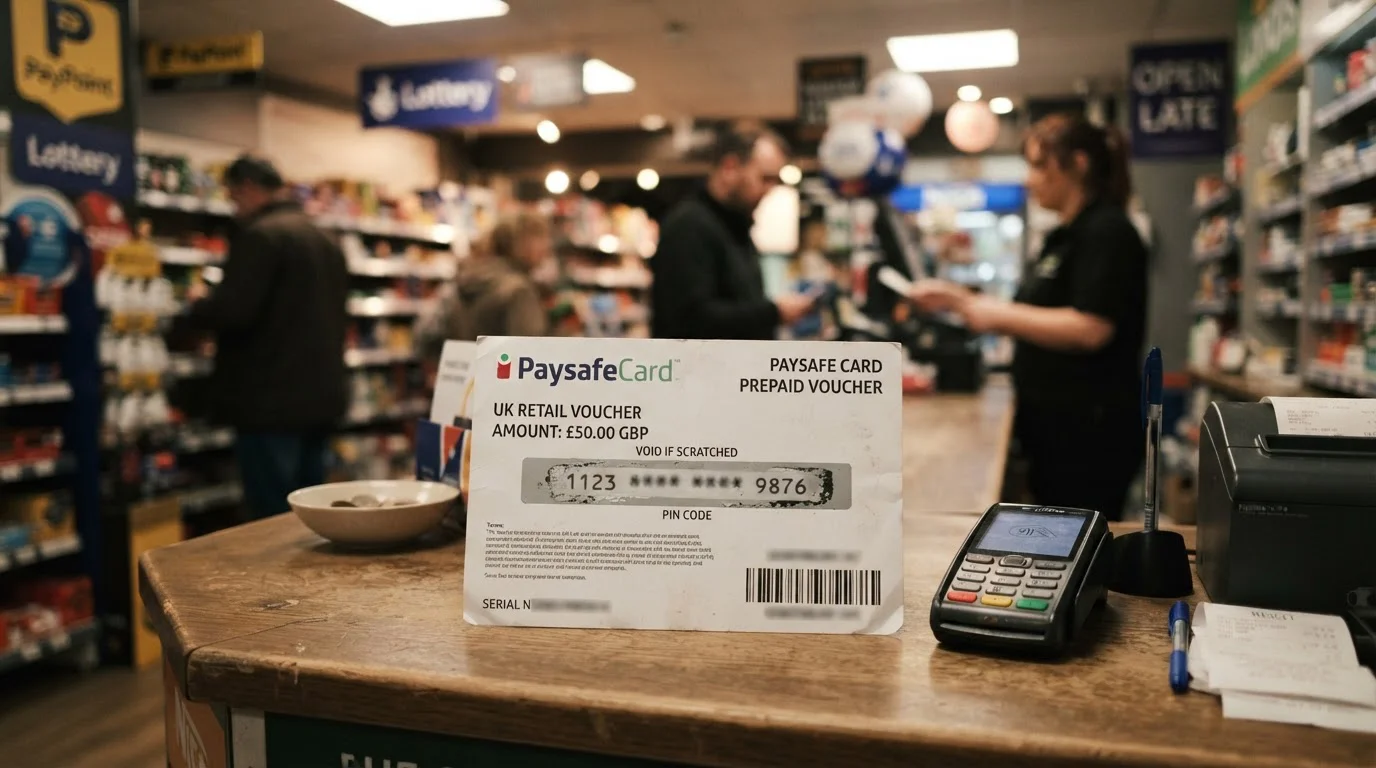
Prepaid vouchers let you deposit with cash, no bank details shared at the transaction. Buy a voucher at a shop, enter the PIN at the casino cashier, funds transfer instantly. The catch: deposit-only, KYC verification still required before withdrawal, and UK casino acceptance has declined from its 2019-2020 peak.
PaysafeCard
PaysafeCard is a prepaid voucher payment method operated by Paysafe Prepaid Services Limited, FCA-authorized as an electronic money institution. Purchase a 16-digit PIN voucher at 35,000-plus UK retail locations—PayPoint outlets, newsagents, petrol stations—or online. Enter the PIN in the casino cashier, balance transfers instantly.
Accepted at approximately 60 UKGC-licensed casinos as of 2026, down from around 100 in 2019-2020. The decline followed UKGC regulatory tightening around anonymized payment methods and stricter KYC enforcement. Instant deposits, £5 minimum typical, £40 maximum per voucher. You can combine up to 10 PINs in a single transaction for larger deposits.
Deposit-only. Withdrawals go to a verified bank account or debit card after KYC. Despite the “anonymous deposit” marketing, UKGC licensing mandates identity verification before your first withdrawal, so disclosing your identity is unavoidable—the voucher merely delays it until cashout. If privacy on your bank statement matters, PaysafeCard keeps the deposit off it, but the withdrawal will appear.
Launched in 2000, PaysafeCard processed €4.1 billion across Europe in 2023, with 650,000 sales outlets globally. Usually bonus-eligible—verify in offer T&Cs. No fees from casinos; the voucher face value is what you get. The two-step process (buy voucher, then deposit) adds friction compared to cards or e-wallets, but it remains the only widely available method for depositing with cash at UKGC-licensed casinos.
Neosurf
Neosurf is a prepaid voucher method operated by Neosurf SAS in France, FCA-authorized as an electronic money institution under EEA passport rules. Similar model to PaysafeCard: purchase a 10-digit PIN voucher at retail locations or online, enter it at the casino cashier, funds transfer instantly.
Limited UK casino acceptance—less common than PaysafeCard. Specific casino count unavailable but cited as “less common” by all competitors. Where supported: instant deposits, £5 minimum typical, £100 to £250 maximum per voucher. Deposit-only, withdrawals to verified bank account or debit card. KYC verification required before first cashout despite anonymous deposit.
Founded in 2004, operates in 50-plus countries, but UK retail network is less dense than PaysafeCard. Usually bonus-eligible where accepted—check T&Cs. Cash purchase possible at participating retailers. No fees from casinos on the transaction itself.
If your casino supports both PaysafeCard and Neosurf, PaysafeCard is the safer bet due to wider acceptance and denser retail network. Neosurf works where it works, but availability at both casinos and retail points of sale is more limited in the UK market.
Are prepaid vouchers like PaysafeCard accepted at UK casinos?
Yes, but at fewer casinos than in 2019-2020. Approximately 60 UKGC-licensed casinos accept PaysafeCard as of 2026, down from around 100 at the peak. Neosurf has even more limited acceptance. The decline stems from UKGC regulatory pressure on anonymized payment methods and stricter KYC enforcement, which reduced the privacy appeal that vouchers originally offered. They remain useful for depositing with cash or keeping the deposit off your bank statement, but KYC verification before withdrawal is mandatory, so full anonymity is impossible at licensed UK casinos.
Withdrawal Speed — What to Expect and Why It Varies
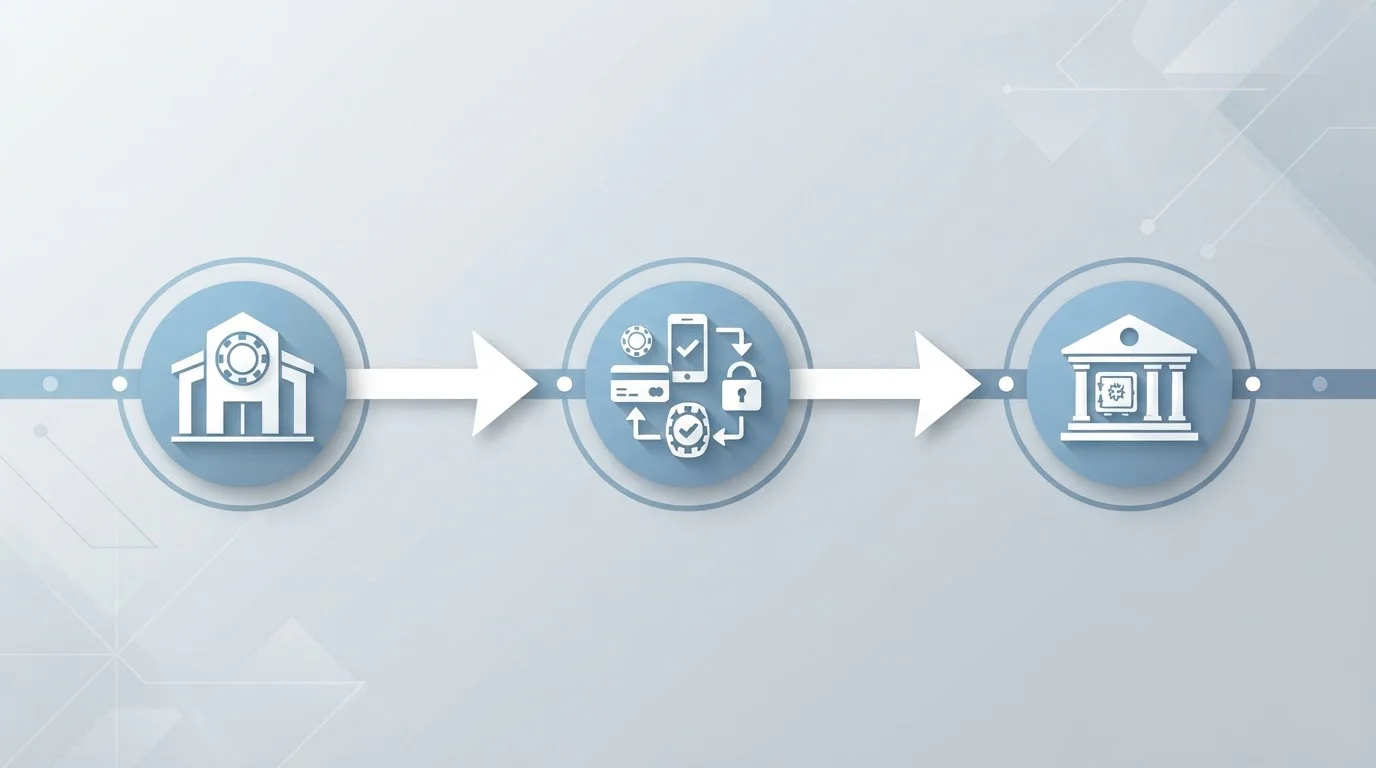
Casino marketing promises “instant withdrawals” and “same-day payouts.” Reality is more granular. Three stages determine when money lands in your account: casino processing time, payment method transfer time, and bank crediting time. Understanding where delays occur helps set realistic expectations.
The Three-Stage Withdrawal Timeline
Stage one: casino processing. The casino reviews your withdrawal request, applies any pending KYC checks, and approves or queues the payout. Time varies by operator: instant to 48 hours. Fast-payout casinos approve within minutes outside business hours; slower operators batch approvals once or twice daily. This stage is entirely under the casino’s control and has nothing to do with your payment method.
Stage two: payment method transfer. Once the casino approves, the payment processor sends funds to your chosen method. E-wallets credit within minutes to hours—PayPal, Skrill, Neteller and MuchBetter consistently deliver sub-24-hour updates, often much faster. Debit cards depend on whether your bank supports Visa Fast Funds or Mastercard Send: supporting banks credit within hours, non-supporting banks take one to three working days. Bank transfers via Trustly or instant banking services move through UK Faster Payments, typically arriving within hours. Traditional BACs bank transfers take one to three working days.
Stage three: bank crediting. For card and bank transfer withdrawals, your bank receives the incoming payment and credits your account. Most major UK banks and challenger banks process Faster Payments and fast-funds card credits near-instantly. A few legacy banks still batch overnight or over working days. E-wallets bypass this stage entirely because the funds land in your wallet balance, not your bank account—you control when to transfer them onward.
The advertised “24-hour payout” describes the casino-to-payment-method leg (stages one and two), not the full journey to your current account. If your bank adds a day or two at stage three, the overall timeline stretches accordingly.
| Stage | What happens | Typical time | Controlled by |
|---|---|---|---|
| 1. Casino processing | Request reviewed, pending KYC applied, payout approved or queued | Instant–48 hours | The casino |
| 2. Payment transfer | Processor pushes funds to your chosen method | Minutes–hours (e-wallets, Faster Payments); 1–3 days (cards without fast funds, BACS) | Payment method |
| 3. Bank crediting | Your bank posts the incoming payment to your balance | Near-instant at fast-funds banks; 1–3 days at legacy banks; skipped entirely for e-wallets | Your bank |
Which Methods Are Genuinely Fastest
E-wallets win. PayPal, Skrill, Neteller and MuchBetter delivered the quickest overall timelines in real-world testing: once the casino approved the withdrawal, wallet balances updated within 2 to 24 hours, often within minutes. No stage-three delay because the funds stop at the wallet.
Debit cards have caught up at banks supporting fast-payment rails. Barclays, HSBC, Lloyds, NatWest, Monzo, Starling and Revolut all credit Visa Fast Funds and Mastercard Send payments within hours, sometimes minutes. Smaller banks and a few legacy institutions still batch card credits over one to three working days. Test it once with a small withdrawal—your bank’s behaviour will not change transaction to transaction.
Instant bank transfers via Trustly or Zimpler can match e-wallet speed when the casino processes quickly and UK Faster Payments routes the withdrawal without delay. Same-day arrivals are common, sub-hour arrivals possible. Traditional BACs bank transfers remain the slowest: one to three working days regardless of casino or bank.
Pay by Mobile, PaysafeCard, Neosurf, Apple Pay, Google Pay and Klarna offer no direct withdrawal route. Cashouts must go to a verified bank account or debit card, inheriting that method’s timeline.
Which payment method has the fastest withdrawals at UK casinos?
E-wallets: PayPal, Skrill, Neteller and MuchBetter. Withdrawals approved by the casino reach the e-wallet balance within 2 to 24 hours in real-world testing, often within minutes. No additional bank crediting delay because funds stop at the wallet. Debit cards can match this speed at banks supporting Visa Fast Funds or Mastercard Send, but speed depends on your bank. E-wallets are consistently fastest regardless of which bank you use.
How long do casino withdrawals take in the UK?
From request to money in your account: hours to three working days, depending on three factors. Casino processing time (instant to 48 hours), payment method transfer time (instant for e-wallets, hours to days for cards and banks), and bank crediting time (instant at fast-funds-supporting banks, one to three days at others). E-wallets deliver the shortest total timeline. Debit cards at supporting banks come close. Traditional bank transfers take longest. KYC verification adds delays only on your first withdrawal if you have not uploaded ID beforehand.
Deposit Limits — Low Stakes to High Roller
Minimum deposits at UKGC-licensed casinos typically sit at £5 to £10 depending on the payment method. Maximum limits vary more dramatically: cards cap around £5,000 to £10,000 per transaction, e-wallets match that range, while bank transfers and Trustly can handle £10,000 to £50,000.
Low-stakes players benefit from debit cards, mobile wallets and prepaid vouchers, all accepting £5 to £10 minimums. Pay by Mobile sits lowest with £5 entry but caps daily deposits at £30 to £40, enforced by mobile networks regardless of casino policy. PaysafeCard vouchers sell in denominations as low as £10, though you can combine multiple vouchers in one transaction up to the casino’s limit.
High rollers hit card ceilings quickly. A £10,000 win cannot be withdrawn in one card transaction if the casino or card scheme caps at £5,000—it splits across multiple transactions or requires switching to bank transfer. Trustly and instant bank transfer services routinely handle £10,000 to £50,000 per transaction, with some casinos accepting higher amounts on request. Traditional BACs bank transfers carry similar high limits but take longer to process.
What is the minimum deposit at UK online casinos?
Typically £5 to £10 depending on payment method and casino policy. Debit cards, e-wallets, mobile wallets and instant bank transfers usually accept £10 minimums. Prepaid vouchers like PaysafeCard work from £5. Pay by Mobile starts at £5 but caps daily totals at £30 to £40. A few casinos set higher minimums—£20 or £25—to qualify for specific promotions or VIP tiers, but £10 is the standard entry point across UKGC-licensed operators in 2026.
Fees, Bonus Eligibility and Payment Rules
UKGC-licensed casinos rarely charge fees on deposits or withdrawals. The fees that do exist appear outside the casino’s control: e-wallet-to-bank transfers, mobile network billing charges, and currency conversion markups.
Do UK Casinos Charge Payment Fees
No, in the overwhelming majority of cases. UKGC-licensed casinos do not levy fees on deposits or withdrawals processed through standard UK payment methods. No charge for debit card deposits, no charge for card withdrawals, no charge for e-wallet or bank transfer transactions at the casino’s end.
Fees appear elsewhere in the chain. Skrill charges approximately 2% to transfer funds from your Skrill wallet to your UK bank account—the casino-to-Skrill leg is free, the Skrill-to-bank leg is not. Neteller operates a tiered fee structure for the same wallet-to-bank withdrawal. PayPal does not charge UK users for transfers to UK bank accounts, a key advantage over Skrill and Neteller.
Mobile networks may levy a processing charge on Pay by Mobile deposits, typically a small percentage added to your phone bill. Check your network’s terms—some operators block gambling billing entirely, others permit it with fees disclosed at the point of transaction.
Currency conversion fees apply if you deposit in a currency different from your casino account currency or your bank account currency. Casinos, payment processors and banks all apply exchange rate markups. Stick to GBP throughout the chain to avoid conversion costs.
Card schemes—Visa and Mastercard—do not charge UK domestic transaction fees. The zero-fee model applies to deposits and to withdrawals processed via Visa Fast Funds or Mastercard Send. International card transactions may incur fees, but UKGC-licensed casinos operate GBP accounts, so UK players using UK-issued cards transact domestically.
Which Methods Qualify for Bonuses
Debit cards, Apple Pay, Google Pay, bank transfers and Trustly qualify universally. No UKGC-licensed casino excludes these methods from welcome offer eligibility. Use them if claiming a bonus matters.
Skrill and Neteller are excluded from most welcome offers. The exclusion appears in the small print: “Deposits via Skrill, Neteller or [other e-wallets] do not qualify for this promotion.” Not every casino excludes them—some accept Skrill and Neteller deposits for bonuses—but the majority do. The reason: anti-abuse measure targeting bonus hunters who cycle funds rapidly between casinos via e-wallets.
PayPal exclusion is less common but exists. Some operators treat it like Skrill and Neteller, others allow it. Check the T&Cs before depositing if a welcome bonus is the goal.
MuchBetter, Payz, Jeton and other niche e-wallets vary by operator. No universal rule—some casinos exclude all e-wallets, others only Skrill and Neteller, a few accept everything. The only certainty: debit cards and bank methods always qualify.
Prepaid vouchers—PaysafeCard and Neosurf—usually qualify, though exclusions occur. Pay by Mobile typically qualifies. Verify in the offer terms regardless of method.
Which payment methods qualify for welcome bonuses and which are typically excluded?
Debit cards (Visa, Mastercard), Apple Pay, Google Pay, bank transfers and Trustly qualify universally. Skrill and Neteller are excluded from most welcome offers due to anti-abuse measures. PayPal is occasionally excluded. MuchBetter, Payz and other niche e-wallets vary by casino. Prepaid vouchers and Pay by Mobile usually qualify. Always check the specific offer’s terms before depositing—the exclusions are listed explicitly in the small print.

The UK Regulatory Framework — What You Need to Know
UKGC licensing shapes every payment experience at UK online casinos. Three rules affect every transaction: the credit card ban, KYC verification, and closed-loop withdrawals.
The Credit Card Ban
On 14 April 2020, the UK Gambling Commission banned gambling with credit cards under Licence Condition 6.1.2 of the Licence Conditions and Codes of Practice. The ban applies to all UKGC-licensed operators across online and most offline gambling products: casinos, sports betting, bingo, high street bookmakers, track bookmakers, and lotteries accepting online or telephone payments.
The ban extends to credit cards loaded into e-wallets. E-wallet accounts used for gambling must be funded by debit card or bank transfer only—credit funding is blocked at the wallet level for gambling transactions. The restriction aims to prevent consumers gambling with money they do not have, reducing the risk of harm from gambling with borrowed funds.
Non-remote lottery operating licences are exempt: credit cards can still be used to buy lottery tickets and scratchcards in shops alongside non-gambling products, and via post where card details are sent by mail. The exemption exists because retailers cannot reasonably identify and block credit card payments for lottery products when mixed with other purchases.
Debit cards, bank transfers, e-wallets funded by debit/bank, mobile wallets and prepaid vouchers remain legal and widely supported. No prospect of the ban reversing—it is settled UKGC policy with broad political and public health support.
KYC Verification and Closed-Loop Withdrawals
Know Your Customer verification is mandatory before your first withdrawal at every UKGC-licensed casino. Casinos must confirm your identity, typically with a photo ID (passport, driving licence) and occasionally proof of address (utility bill, bank statement). Verification can take minutes to 48 hours depending on operator efficiency and document clarity.
Upload ID immediately after registering, before you win. Verification while nothing is at stake means your first real withdrawal processes without delay. Wait until you’ve won and want to cash out, and verification holds your withdrawal until complete—a frustration entirely avoidable by front-loading the check.
Closed-loop processing requires winnings to return to your deposit method wherever technically possible. It is an anti-money-laundering control mandated by UK regulations. Deposit via debit card, withdraw to the same card. Deposit via PayPal, withdraw to PayPal. If your deposit method cannot receive withdrawals—Pay by Mobile, PaysafeCard, Neosurf—the casino pays to a verified bank account or debit card instead.
The rule protects you if your payment details are misused: stolen funds deposited at a casino must be refunded to the original source, not redirected elsewhere. It also prevents casinos being used to launder money by depositing via one method and withdrawing via another.
Why do I need to verify my identity before withdrawing?
UKGC licensing requires every casino to verify identity before releasing funds, a process known as KYC. It confirms you are who you claim to be, that you are over 18, and that the payment methods belong to you. Verification is a one-off: complete it early—ideally straight after registering—and later withdrawals process without the hold-up. The requirement is non-negotiable at licensed UK casinos; operators refusing KYC are operating illegally.
Can I withdraw to a different payment method than I deposited with?
Only if your deposit method cannot receive withdrawals. Closed-loop processing requires winnings return to the deposit source wherever technically possible: deposit via card, withdraw to card; deposit via PayPal, withdraw to PayPal. Deposit methods that cannot receive withdrawals—Pay by Mobile, PaysafeCard, Neosurf, Klarna—require you to verify an alternative withdrawal method (bank account or debit card). Once verified, that method receives the payout. You cannot deposit via Skrill and withdraw via debit card if both methods support withdrawals—anti-money-laundering rules prohibit it.
Why Cryptocurrency and No-Account Casinos Aren’t Options
Two categories of queries arrive regularly: crypto casino UK, no-KYC casino UK. Neither works within the UKGC-licensed ecosystem.
UKGC-licensed casinos cannot legally accept cryptocurrency deposits or withdrawals as of 2026. The regulatory barrier is structural, not technical. Cryptocurrencies do not integrate with the UKGC’s KYC, anti-money-laundering and source-of-funds frameworks. Licence conditions require operators to verify the source of customer funds and monitor transactions for suspicious activity—impossible when payments move through pseudonymous blockchain addresses controlled by private keys held outside regulated financial infrastructure.
Bitcoin, Ethereum, Solana, Ripple, Dogecoin, Bitcoin Cash, Binance Coin and every other cryptocurrency remain unavailable at UK-licensed casinos. Offshore casinos targeting UK players may accept crypto, but they operate without UKGC licences—no segregated funds, no dispute resolution, no responsible gambling protections, no recourse if the operator vanishes. Using them is legal for the player but carries risks that licensed operators are required to eliminate.
“No account” and “no KYC” casinos contradict UKGC licensing requirements. Licence conditions mandate identity verification before withdrawal. Pay N Play services like Trustly can pull KYC data from your bank during deposit, streamlining registration, but verification before cashout remains mandatory under UK law. A casino claiming “no verification” or “no KYC” is either unlicensed (illegal to operate for UK customers) or misleadingly marketing streamlined registration as “no account” while still requiring verification at withdrawal.
If anonymity is the goal, UK-licensed gambling cannot provide it. KYC is the legal baseline. Offshore casinos offering “no KYC” operate outside UK jurisdiction with no consumer protections.
Choosing Your Payment Method
No universal “best” exists. Match the method to what you prioritise.
Claiming a bonus? Debit card, Apple Pay, Google Pay or bank transfer. These qualify everywhere, no asterisks in the terms. Skrill and Neteller fail most welcome offers. PayPal works at some casinos, not others—check before depositing.
Fastest withdrawals? E-wallets win in testing: PayPal, Skrill, Neteller, MuchBetter. Casino approval to wallet balance in hours, often minutes. Debit cards match the speed at banks supporting Visa Fast Funds or Mastercard Send—Barclays, HSBC, Lloyds, NatWest, Monzo, Starling, Revolut—but lag one to three days at banks without fast-payment rails.
Mobile convenience? Apple Pay on iOS, Google Pay on Android. Biometric authentication, instant deposits, no card number typed. Withdrawals return via the linked card, following that route’s speed. Pay by Mobile works for deposits up to £30 daily but offers no withdrawal path.
Privacy on your bank statement? E-wallets keep the casino name off it—your bank sees PayPal or Skrill. Prepaid vouchers go further: buy with cash, deposit without sharing bank details. KYC verification before withdrawal is unavoidable, so full anonymity does not exist at licensed UK casinos.
High limits? Bank transfer or Trustly. £10,000 to £50,000 per transaction compared to £5,000 to £10,000 card caps. Withdrawals return the same route, often within hours via Faster Payments.
Zero fees? Debit cards, PayPal, bank transfers and mobile wallets incur no casino fees. Skrill charges ~2% to move funds from wallet to bank, Neteller has tiered fees. Pay by Mobile may carry network billing charges.
Every payment method available at UK casinos operates under UKGC licensing: secure processing, segregated customer funds, dispute resolution. The differences lie in speed, cost, bonus eligibility and convenience. Pick the method that solves your priority, not the one marketed as “best.”
All UKGC-licensed casinos require KYC verification before your first withdrawal. Upload ID immediately after registering to avoid delays when you win. Set deposit limits in your account settings before your first payment—decreases apply instantly, while increases take 24 hours to come into effect. If gambling spending ever stops feeling like entertainment, the National Gambling Helpline operates around the clock on 0808 8020 133, and GAMSTOP can block every UK-licensed site in one registration.
Casino Deposit Methods UK 2026 — Cards, E-Wallets & More
Content created by the «casinomoneyg» team